Notion for SMEs in 2025: Real Project Management Wins & Fixes
Discover what actually works - and what doesn't - when using Notion as a project management hub for small and medium businesses in 2025
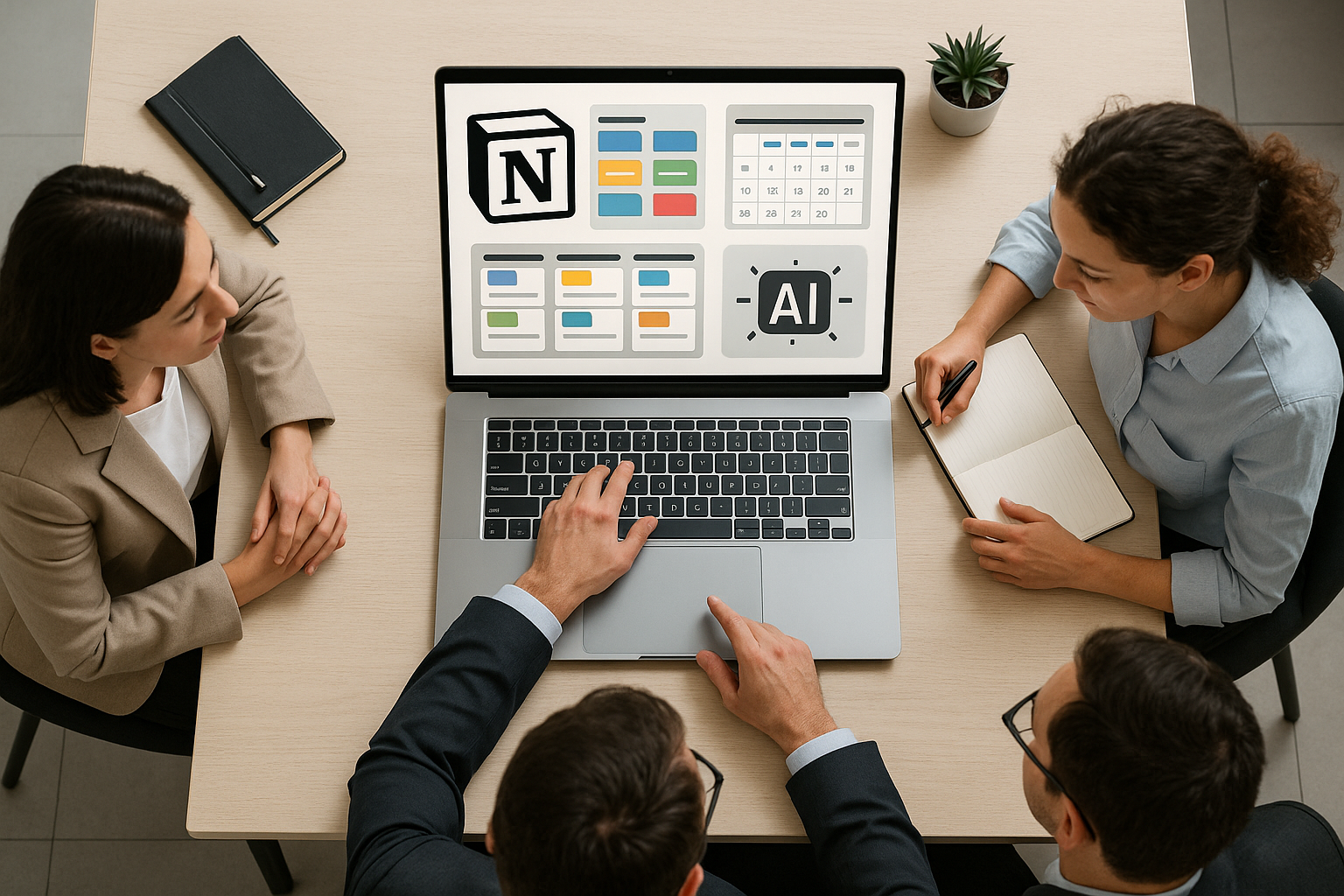
Table of Contents
-
Build a Central SME Project Hub - Stop Juggling Tabs
-
Standardize and Automate - Templates & AI for Consistency
-
Link, Sync, and Reduce App Fatigue
-
Let Notion AI Sweat the Small Stuff - Meetings, Summaries, and Research
-
Pricing, Limitations, and Scaling Up - Start Small, Don't Get Lost
-
My No-BS Take
Let's get brutally honest - every week, there's a "productivity" app promising to transform team productivity. The reality for most SMEs? Tool chaos, context switching, and lost minutes that add up to entire months over a year. I've tested it all - sprints in Miro, Trello, Monday.com, Asana, Jira, lost comments in Slack, Discord, WhatsApp, critical docs adrift in Google Drive, OneDrive, Dropbox, you name it. Yet nothing has stuck as Notion has so far. But, as always, there's a catch!
Here's what actually works, what needs fixing, and what I'd tell any founder, manager, or fast-moving exec about using Notion for real-world project management in 2025.
YET, before you assume that Notion is the ultimate solution for everyone, let's be realistic: what works for me won't necessarily work for you. The most important thing isn't the tool itself - it's about organizing your information and, more importantly, creating systems and processes you can rely on every day. That said, let me share my own personal AND professional setup. Here's why my system fits my needs, and - if you have to choose just one project management tool for your SME - why I still recommend Notion as the best starting point.
1. Build a Central SME Project Hub - Stop Juggling Tabs
Real-world problem: In most SMEs, project details are scattered between emails, Slack threads, spreadsheets, and PDFs. Notion's edge: It lets you build a unified project hub: custom databases, kanban boards, timelines, deadlines, briefs, and discussion - all in one view. Everyone sees the same data in their favorite format.
Business snapshot: A marketing agency uses Notion for all client projects - internal tasks go to a kanban board; deliverable deadlines appear in a client-accessible calendar. Clients comment right on the deadlines, while the agency team drags tasks to signal progress. No need for five different logins, zero "did you get my email?" chaos.
2. Standardize and Automate - Templates & AI for Consistency
Blank-canvas flexibility is Notion's blessing and its trap. Teams drown in freeform unless you create structure. Enter: database templates for making repeatable workflows (briefs, SOWs, charters) and AI summaries that auto-update as tasks move.
Live use case: A software consultancy has every project auto-populate with scope, milestones, and risk fields. Weekly, managers eye the color-coded ring chart AI creates and instantly know which projects need attention - no more prepping reports from scratch.
3. Link, Sync, and Reduce App Fatigue
Notion's relational databases mean updating a task ripples into project timelines automatically. Its true superpower? Embed everything else: Figma, Google Docs, Miro, Slack, Jira, and GitHub. One workspace, no tab overload.
Example: A product team links their bug-tracking to the feature roadmap. Fix a bug, and progress bars on features update. Marketing gets Slack pings when statuses change. Designers drop Figma prototypes straight into feature cards for instant stakeholder feedback.
Centralizing all project data in Notion slashed my wasted time juggling multiple apps - this wouldn't have been possible if I had tasks scattered across email, Slack, and spreadsheets.
4. Let Notion AI Sweat the Small Stuff - Meetings, Summaries, and Research
Notion AI integration changes the game: AI-generated summaries, meeting action lists, automated research, and enterprise search across connected apps. No more missing action items or forgotten decisions.
A real workflow: A consulting firm records a Zoom meeting, Notion AI grabs the transcript, extracts action items, and assigns owners. The summary drops back into the project page. Need to answer "what's blocking our campaign?" - An AI query scans Slack, Drive, and Notion for you.
5. Pricing, Limitations, and Scaling Up - Start Small, Don't Get Lost
The good: free and low-tier plans deliver real value; AI features shine at the Business level. The catch: Notion needs upfront setup, and big teams or recurring/complex workflows might hit friction points. Automations frequently require Zapier, Make.com, or similar tools.
Studio example: Five designers start on the free plan. As they standardize on Notion, the Business plan's $20/user/month is worth it - cutting out other subscriptions. They review after a few months: is custom automating worth the effort, or is it time to pivot to a more specialized tool?
My No-BS Take
Notion's power lies in starting simple - a to-do list - then layering complexity as your org matures. Its biggest win: the same project can be a board, calendar, or timeline. AI quietly handles status updates, summaries, and research once you're ready. The cost? A willingness to invest effort up front and rethink old habits. Missing built-in automations or recurring tasks? You'll feel it, but extending Notion is possible.
My advice: Start with a basic tracker. Use templates for new projects, and roll in AI features as you go. If your team feels like they're coding systems more than delivering outcomes, hit pause and reconsider your stack.
What about you? Have you made Notion your company's OS, or faced challenges that pushed you toward another solution? If you're ready to make the most out of Notion - or want help streamlining your workflows with automations (Zapier, Make.com, n8n, or beyond) - drop your workflow, tips, or pain points below. I'm happy to help you set things up, suggest automation strategies, or troubleshoot roadblocks. Let's build better, together!
— by Dr. Hernani Costa | First AI Movers
If you found these tips useful, dive deeper into the AI-powered future of productivity with my hands-on review of:
The AI Browser Revolution: Why Dia and Comet Are Changing Everything We Know About Web Browsing
Top 25+ Startup Blogs & Newsletters for Founders in 2025: The Ultimate Directory
Perplexity Labs in 2025: My Ultimate Guide, Honest Experience, and What Every Power User Needs to...
If you want to stay on top of the strategic opportunities and challenges as this change unfolds, subscribe below for practical insights and real-world updates, delivered in plain language.
Get your 5-minute AI edge every morning at 6 AM - before your first meeting, before the market moves. I personally curate the critical AI developments in policy, technology, and business that busy professionals need to know.
Subscribe to the free daily newsletter here.
Let's share real results: comment with your favorite Notion or project management tip below - or follow me for more honest insights on digital work.
Author: Dr. Hernani Costa — Founder of First AI Movers and Core Ventures. AI Architect, Strategic Advisor, and Fractional CTO helping Top Worldwide Innovation Companies navigate AI Innovations. PhD in Computational Linguistics, 25+ years in technology.
Originally published at First AI Movers under CC BY 4.0.