The Air We Breathe - Tech's Next Frontier
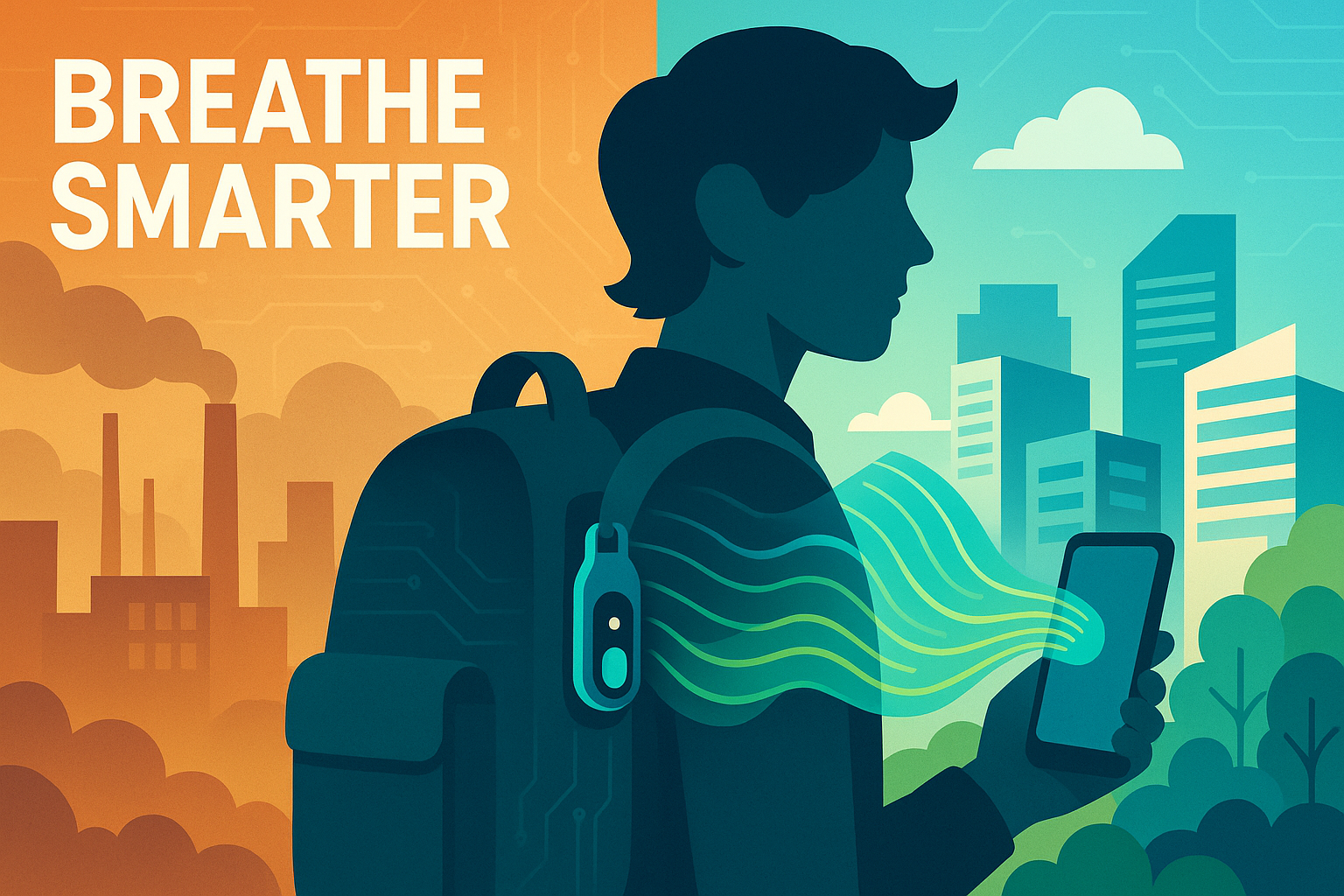
It's 2025, and the fight for clean air has never been more urgent. Across the globe, 99% of people breathe air that exceeds healthy limits. The consequences are becoming all too clear: when wildfire smoke turned New York City's skies orange in 2023, asthma ER visits doubled. Air pollution contributes to millions of premature deaths each year, yet it often remains an invisible threat. But there's hope on the horizon.
A new wave of real-time exposure sensors and AI analytics is emerging to turn this invisible threat into actionable insights. Young innovators at the intersection of climate and health tech are seizing this moment. Imagine a navigation app that automatically reroutes your commute to avoid high-pollution zones, or a smartwatch that alerts you when the air around you is unsafe. These ideas are becoming a reality, and they represent a huge opportunity to build tech solutions with real impact.
Wearable Sensors: Making the Invisible Visible
The first piece of this puzzle is the sensor hardware. In 2025, you can clip a tiny air quality sensor to your backpack or install one at home, and it will continuously sniff out pollutants. Wearable and stationary environmental sensors now measure pollutants such as PM2.5 (fine dust and smoke particles), VOCs (volatile organic compounds - the fumes from paints or car exhaust), and NO₂ (nitrogen dioxide from traffic), among others.
For example, the palm-sized AirBeam sensor measures particulate matter (PM), temperature, and humidity, helping anyone map pollution on their street in real time. These devices put air monitoring in the hands of everyday people. Some devices are wearable (think clip-on or pocket devices) that track your personal exposure as you move through the day. Others are fixed in place, such as on lamp posts or office walls, to monitor a specific location's environment in real-time.
Together, these sensors turn a city or home into a dense web of data points, revealing how air quality can vary block by block and minute by minute. This granular visibility is crucial - it's hard to ignore a problem when you can literally see the pollution levels spike on your phone.
AI as Your Environmental Co-Pilot
Raw sensor data alone isn't enough; this is where artificial intelligence steps in. AI algorithms can analyze the flood of readings from these sensors and translate them into meaningful insights and predictions. For instance, machine learning models like XGBoost can calibrate low-cost sensor readings against high-grade reference monitors, improving accuracy in varied weather conditions. Deep learning can crunch complex patterns - imagine correlating your daily exposure data with asthma symptoms to forecast risk.
AI can personalize alerts based on your context. If the model knows you have sensitive lungs, it might warn you earlier about a spike in PM2.5 and suggest a detour or mask. On a city scale, AI systems are being used to forecast pollution hotspots hours or even days in advance, learning from historical data and weather patterns. Some startups even deploy edge AI - running lightweight neural networks directly on the device or phone - so that your wearable sensor can raise an instant alarm (no internet required) when, say, carbon monoxide or VOC levels suddenly soar.
The combination of real-time sensors and AI transforms a stream of numbers (ppm, µg/m³, etc.) into an "air quality coach" by your side. It's proactive technology: instead of just telling you after the fact that the air was bad, it can predict and prevent harm in the moment.
Opportunities for Innovators
This convergence of environmental sensors and AI analytics is a greenfield opportunity for entrepreneurs. The market for air quality and health-tech solutions is growing fast, and even tech giants are paying attention. For instance, Google acquired AI-powered air quality startup BreezoMeter in 2022 to boost its environmental data offerings.
Here are some promising avenues for innovation:
Product Design
There's room to create sleek, affordable wearable gadgets or smart home devices that integrate seamlessly into daily life. Think stylish air-quality wearables or next-gen smart thermostats that also sense pollutants.
Apps & Services
Beyond hardware, consider mobile apps that use sensor data and AI to deliver value. An app might aggregate crowdsourced exposure data to create live pollution maps or provide a personalized "exposure diary" that correlates with mood or health symptoms. For example, an exposure-aware fitness app could advise runners on the cleanest times and routes for exercise.
Startups & Platforms
Entire startups can be built around this trend. Some might focus on analytics platforms - a system that helps cities or businesses monitor building air and automatically adjust HVAC settings. Others might offer consumer services, such as subscription-based alerts ("high pollen and smoke in your area today - take precautions"). There's also potential in niche markets: think AI-enhanced air purifiers that adapt to sensor feedback or platforms that insurers and healthcare providers use to assess environmental risk.
Open Data & Research
Many governments and NGOs are releasing environmental data openly, which is a goldmine for entrepreneurs. Platforms like OpenAQ aggregate air quality data from hundreds of sources into a free API. A savvy developer can mash up these datasets with machine learning to generate new insights - for instance, predicting the air pollution levels in neighborhoods that lack sensors, or identifying pollution inequities across a city. Open data means you don't need to start from scratch; you can build on existing information to accelerate your project.
Navigating Technical Challenges
Of course, building AI-powered sensor solutions isn't trivial. Here are some key challenges (and opportunities to solve them):
Accuracy vs. Affordability
Lower-cost sensors can be inaccurate or drift over time - readings might vary with temperature or humidity. Tackling this via AI calibration is a must. Some teams use algorithms to correct sensor bias by learning from reference stations, so a $100 sensor can perform closer to a $20,000 instrument. Entrepreneurs should plan for calibration strategies, perhaps offering periodic recalibration as a service or using cloud AI to adjust readings in real-time.
Data Overload
A single device can spew thousands of data points a day. Multiply that by hundreds of users, and you've got a big data scenario. The challenge is storing, processing, and interpreting this flood of information. Efficient data pipelines and cloud platforms are part of the answer, but also think about edge processing - filtering data at the source. AI can help by detecting anomalies or summarizing trends, so users (or city officials) aren't overwhelmed by graphs. After all, people want clear answers ("Is my child's school air safe right now?"), not gigabytes of raw data.
Bias and Coverage Gaps
There's a saying, "air inequality" - not everyone has sensors or wears a device, so certain areas or groups might be under-represented in the data. If your AI model learns only from wealthy neighborhoods (with more devices), it might be biased, underestimating risks in underserved communities. As a founder, you should be mindful of data bias and strive to deploy sensors or collect data in diverse environments. Inclusivity can be a competitive advantage: products that serve all populations will have a broader impact (and market).
Privacy and Trust
Environmental data can get personal. A wearable exposure tracker follows someone's location and daily habits. Users and regulators will rightfully worry about privacy. Startups in this space need rock-solid data security and transparent policies. Consider designing solutions where detailed data stays local (on the user's device) and only aggregated insights go to the cloud. Earning user trust - by anonymizing data, allowing opt-ins for data sharing, and clearly communicating benefits - is crucial. Remember, you're not just selling a gadget or app; you're asking people to let technology watch over their health in a new way.
Learning from Early Pioneers
This field is so new that today's "success stories" are often small teams and grassroots projects, which is great news for young entrepreneurs, because you can quickly make your mark. Some inspiring examples:
AirCasting & the Community Scientists
AirCasting is an open-source platform and app that lets anyone record and share air quality data. Paired with the wearable AirBeam sensor, it has amassed an enormous global dataset (nearly 4 billion data points and counting). In one project, teenagers in Brooklyn used AirCasting to map pollution along a highway and found PM₂.5 levels were five times higher on their route to school than the city average. That's the kind of eye-opening finding that only hyperlocal sensing can reveal. The AirCasting community shows how combining low-cost sensors with data visualization empowers the public - and it hints at the power of open data for startups (the platform's data is open for anyone to analyze).
Atmotube PRO - Personal Air Monitor
The Atmotube PRO is a keychain-sized device that tracks PM1, PM2.5, PM10, and VOC levels in real time. Crucially, it connects to a smartphone app that acts like your personal air quality coach - logging your exposure, sending alerts, and even mapping the air quality of places you visit. Atmotube's impact comes from marrying good hardware with smart software. It's widely used in community research projects, thanks to features like offline data logging and an open API for developers. Essentially, they built a gadget and a platform, demonstrating a great case study for creating an ecosystem around a product.
Utrecht's Exposome Hub
The Utrecht Exposome Hub at Utrecht University is pioneering how we measure the "exposome" - the totality of environmental exposures affecting our health. They've connected experts from sensor tech, data science, and public health to tackle this big picture. In one living lab project, the Hub deployed 20 "mushroom" air sensors around a university campus, streaming live data on fine dust and NO₂ to a public website. The result? Students and staff can see, in real-time, how air quality changes across different spots, making the invisible visible. This interdisciplinary approach is ripe for innovation.
Idea Lab: What Will You Build?
If you're excited by now, you're probably already brainstorming. Here are a few specific ideas that a young AI entrepreneur could explore:
Exposure-Aware Commute App
An app that gives you a "cleanest route" option for walking or biking, based on real-time air quality sensors around the city. It could use AI to predict which path will minimize your exposure.
Smart HVAC Integration
Design an AI that plugs into building ventilation or smart home systems. It would read indoor and outdoor sensor data to optimize air quality while saving energy.
Wearable Health Dashboard
Create a personal dashboard that merges air sensor data with wearable health data, helping users track their exposure and correlate it with health metrics like sleep quality.
Building Your Solution: A 5-Step Strategy
Turning an idea into a real product can feel daunting. Here's a simplified roadmap to guide you:
-
Identify the Problem: Research potential users (e.g., asthma patients, cyclists) and gather open data on air quality.
-
Prototype Data Collection: Use affordable sensors or off-the-shelf devices like Atmotube to gather baseline data.
-
Train the AI Model: Use machine learning libraries to create models that predict air quality risks.
-
Develop the App/Product: Build a mobile app or dashboard that displays real-time air data and user insights.
-
Deploy, Test, Iterate: Pilot your solution, gather feedback, and refine it before scaling.
From Passion to Impact - The Time is Now
The challenges of pollution and environmental health can feel overwhelming, but they also present an unprecedented opportunity for young innovators. 2025 is the perfect time to dive in: public awareness of air quality is high, sensor tech is affordable, and AI tools are more accessible than ever. By integrating real-time exposure sensors with AI, you're not just building another app - you're crafting a solution that could help people breathe easier and live healthier.
The invisible enemy of pollution is finally meeting its match - and it might just be you and your next big idea.
Want to help turn this vision into reality? If you're serious about building cleaner-air tech for yourself, your community, and the children who will inherit our skies, reach out to me. Connect on LinkedIn or drop a comment below, and let's start creating solutions that allow everyone to breathe smarter.
Author: Dr. Hernani Costa — Founder of First AI Movers and Core Ventures. AI Architect, Strategic Advisor, and Fractional CTO helping Top Worldwide Innovation Companies navigate AI Innovations. PhD in Computational Linguistics, 25+ years in technology.
Originally published at First AI Movers under CC BY 4.0.